
Secret to Getting a Good Night’s Sleep
Sleep is essential for our physical and emotional wellbeing. By practising sleep-promoting techniques, you can discover strategies that improve the quality of your sleep. Adults need between 6 and 9 hours sleep every night.

A predictable routine around bedtime will promote quality sleep so go to bed when you feel tired and get up at the same time each day.
If you need extra sleep, remember sleep occurs in 1 ½ hour cycles. So, aim to sleep in for no more than 1 ½ hours, or nap for 30-45 minutes early afternoon, to avoid feeling groggy or grumpy. Alternatively, if you find yourself getting sleepy during the day or way before your bedtime, get active and do something.
Create predictable patterns around sleep because we learn by association. Reduce the noise. Try out relaxing activities in the lead-up to bedtime such as reading, listening to soothing music, by doing some mindfulness practise, gentle stretching or breathing exercises, engage in a favourite hobby, listen to an audio e-book or podcast, or watch your favourite TV show. Create your own predictable routine, for example, finish your chores, brush, and floss your teeth, bath, shower or get into your pj’s, turn lights down, have a warm drink while doing your favourite relaxing activity, and as soon as you feel tired, go straight to bed.
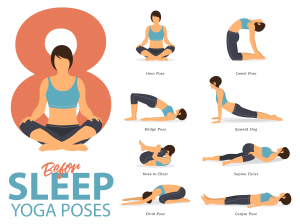
Reserve your bed for sleep and sex only. Do not do anything else in bed. Do not start conversations with your partner, or watch T.V., or read, or look at your phone, or even worry or plan your next day in your mind. This is important because you want your brain to associate your bed with sleeping so it can release melatonin to get you off to sleep quickly. It is fine to do these things before bed but do it on the couch or on a chair in your room if you have to.
Our sleep is affected by our exposure to light so increase your exposure to light during the day, by spending more time outdoors. In the morning, let as much light into your home or workspace as possible. Exposure to light in the morning increases, sleep-promoting, melatonin at night.
At night, reduce lighting in the home as much as possible. Try using red or low voltage warm light bulbs as the sun goes down. The bedroom should be dark like a cave, unless this is scary for you then use a night light.
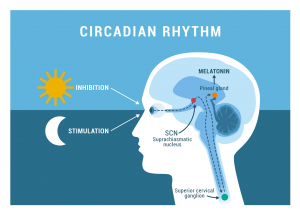
Have healthy eating habits and get regular exercise.
Eat meals around the same time every day if you can and avoid big meals and rich foods within two hours of bed.
Avoid excess alcohol.
Avoid caffeine 7-hours before bedtime.
Reduce how much liquids you drink in the lead up to sleep.
Quit smoking if you can or try to avoid smoking in lead up to bedtime. If you wake up in the middle of the night, do not smoke because it will keep you awake.
You are likely to sleep more deeply if you exercise for at least half an hour daily. If you cannot exercise, try gentle stretching.
Manage stress and reduce anxiety around bedtime
Try one of these:
Close your eyes—and try taking deep, slow breaths—making each breath even deeper than the last.
Place one hand on your belly and the other on your heart. Notice the feeling of your hands on your body as you breathe and when a thought pops into your mind, thank your mind for that and gently return your attention to your hands and the movement of your body. Continue to do this and expect your mind to come up with its thoughts. Accept thoughts as just thoughts that don’t require your attention and return to your attention to your hands and the movement there. Try to focus on the feelings and sensations in your body.
Breathe in through your nose, count to 4-6 depending on your lung capacity, hold your breath for a count of two, then breathe out for a count of 4-6 ensuring you empty your lungs completely before you take another breath. Repeat till you feel calmer.
Visualising a peaceful, restful place. Close your eyes and imagine a place or activity that is calming and peaceful for you. Concentrate on how relaxed this place or activity makes you feel.
Ways to get back to sleep
If you have been awake for more than 15 minutes, get out of bed and do a quiet, non-stimulating activity. Avoid screens and white light and as best as you can postpone worrying and brainstorming. If you are unable to, then write the concern down, to be dealt with in the morning. Remember we can lose some sleep and still be well enough the next day so make relaxing the goal, not sleep.
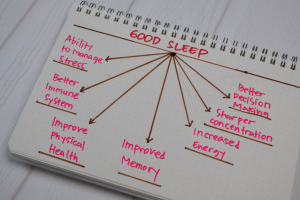
See your doctor or other health professionals if you have tried the tips above but are still struggling with sleep problems. Tell your doctor if you have:
- Persistent daytime sleepiness or fatigue, loud snoring accompanied by pauses in breathing.
- Ongoing difficulties falling asleep or staying asleep
- Unrefreshing sleep
- Frequent morning headaches or frequent dizziness
- Crawling sensations in your legs or arms at night
- Inability to move while falling asleep or waking up
- Physically acting out dreams during sleep
- Falling asleep at inappropriate times
- Ongoing anxiety or high levels of stress
- Not sleeping at all for several days
Co-authored by Psychologists Jia Yee Ho and Theresa Hewlett, 11/09/2021
Smith, M & Segal, R. (2020). How to sleep better. Retrieved on 26/04/2021 from https://www.helpguide.org/articles/sleep/getting-better-sleep.htm.
Other Posts You May Like
Friendship Foundations
This therapeutic group is designed to support children aged 7-9 years old in developing essential social skills that foster meaningful and lasting friendships. Through structured activities, guided discussions
A Big Thankyou to Dawson Park Primary School
We would like to dedicate this post specifically to students from Dawson Park Primary School for their generous contribution to Foothills Mental Health & Wellbeing this year, 2022!